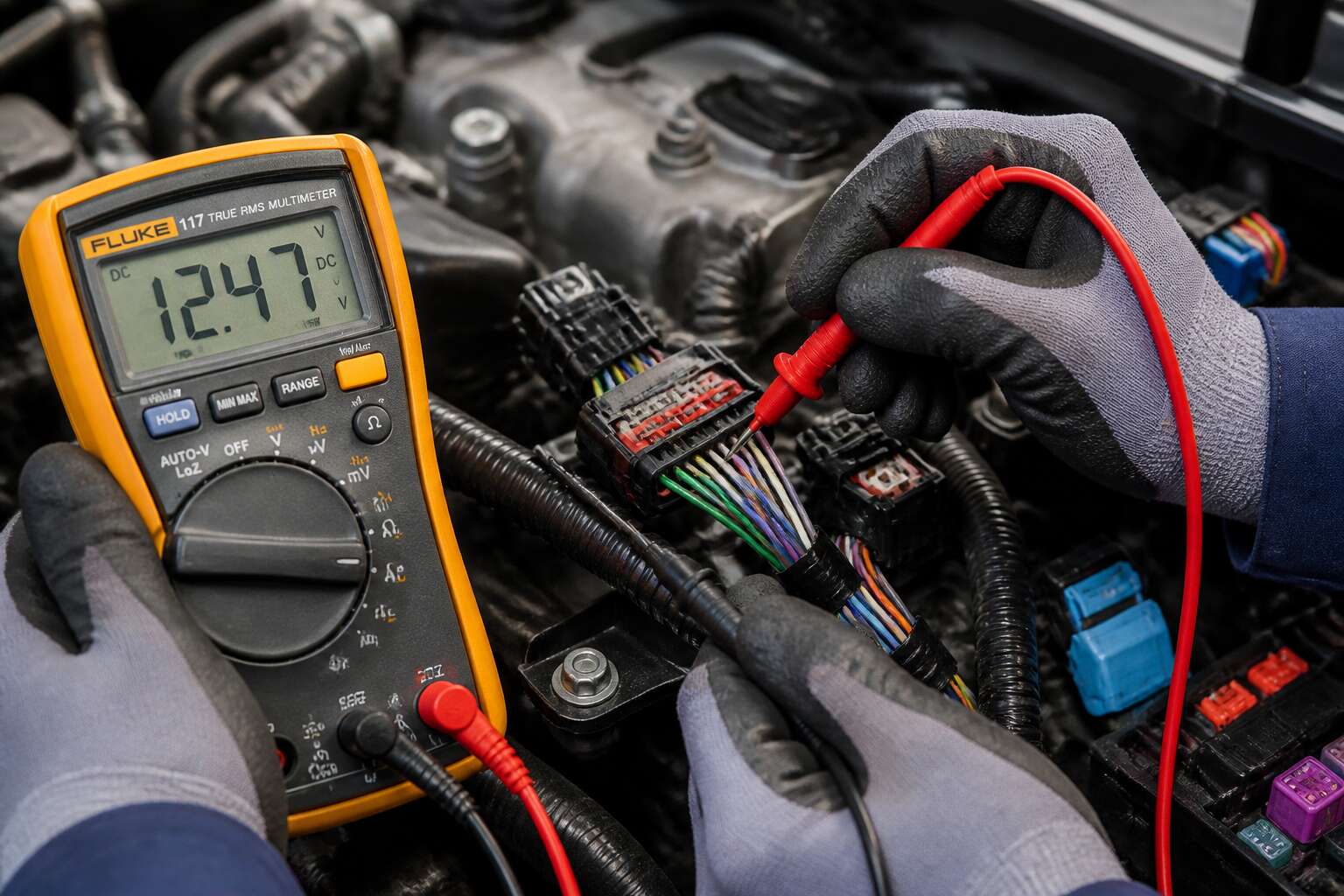
Understanding the Auto Electrical Apprenticeship
What Is an Auto Electrical Apprentice?
South Africa’s vehicle parc grows with each passing year, and modern cars are intricate networks of sensors, controllers, and wiring. An auto electrical apprenticeship is the structured pathway individuals take to master this specific craftause. This is the work of diagnosing and repairing the electrical systems that govern everything from ignition to infotainment. It is not a casual job; it is a rigorous professional commitment.
The apprentice learns to read complex wiring diagrams and use specialised diagnostic equipment. The training involves a combination of theoretical study and hands-on work in a dealership or workshop setting. Daily tasks often involve tracing shorts, testing alternators, and replacing faulty components. The skill set is more expansive than one might think, covering several core areas:
– Starting and charging systems
– Electronic engine management
– Vehicle lighting and accessory circuits
– Advanced driver-assistance systems
As the apprenticeship progresses, the theoretical knowledge becomes instinctive. The learner moves from simply observing a mentor to interpreting electrical faults with confidence. We move beyond simple battery replacements and into the realm of multiplexed networks and control modules. This progression is the heart of the experience, transforming a person from a helper into a true specialist. The focus remains on precision and a deep understanding of market vehicles. I find the blend of logical problem-solving and tangible physical work to be a deeply rewarding craft for the temperament that values solid results.
Typical Responsibilities and Work Environment
The workshop floor in South Africa rarely stays silent. An auto electrical apprenticeship places you inside that environment, where every bay holds a different electrical fault. Your daily responsibilities extend beyond holding a test light.
Core duties demand a methodical approach:
- Fault finding on intermittent electrical failures
- Rebuilding starters and alternators under time pressure
- Interpreting diagnostic trouble codes from engine control units
- Recalibrating sensors after component replacement
The work environment itself shapes the learning. Dealership workshops expose apprentices to modern vehicle networks, while independent garages present older, harder cases. Both settings require patience. I have watched apprentices spend an entire morning tracing a single short circuit, only to discover a chafed wire hidden behind a bumper. That persistence defines the auto electrical apprenticeship.
How It Differs from a General Mechanic Apprenticeship
Most people assume all apprentices start with spanners and sockets. The auto electrical apprenticeship demands a different first tool: a multimeter. General mechanics rebuild engines, but you will chase voltage drops and short circuits. This shifts how you understand a vehicle.
The diagnostic approach sets these paths apart. A mechanic with a rough-running engine replaces filters, plugs, and coils. You must interpret live data from sensors and decide which wire is lying to you. This requires more than patience, it demands methodical reasoning. I have seen apprentices struggle because they expected mechanical symptoms, but electrical failures rarely announce themselves.
Compare the core skills:
- Mechanics learn to read torque specs and feel for mechanical wear.
- You learn to read wiring diagrams and measure signals precisely.
That difference shapes your career. The auto electrical apprenticeship leads you into a field where faults are invisible and solutions are logical.
Essential Skills and Qualities for Success
Technical Aptitude and Problem-Solving
The modern vehicle is no longer a purely mechanical beast. It is a computer network on wheels, which means the auto electrical apprenticeship now demands a mindset wired for logic as much as for manual labour. You can turn a spanner all day, but if you cannot decode a wiring diagram, you are effectively working blind.
Technical aptitude here is not about being a physicist. It is about understanding the flow of current, the function of a relay, and the language of a CAN bus system. Problem-solving, however, is the real currency. The ability to isolate a fault that could be hiding in a chafed wire or a faulty sensor is the difference between a parts changer and a genuine diagnostician.
To succeed, you need a specific blend of perseverance and intellectual curiosity. Electrical gremlins are notoriously stubborn; they rarely reveal themselves during the first ten minutes of testing.
Mastering this trade requires a solid grasp of the fundamentals:
– Reading complex manufacturer schematics
– Using multimeters and oscilloscopes with accuracy
– Understanding CAN bus and multiplexing networks
– Applying logical fault-finding procedures, not guesswork
– Staying patient under the pressure of a stalled repair
An auto electrical apprenticeship will push your reasoning to the edge. The market is desperate for people who can solve problems rather than simply replace parts, and that reputation is earned through methodical, disciplined thinking. It is a craft that rewards the persistent and punishes the careless.
Attention to Detail and Diagnostic Thinking
Diagnostic thinking demands a forensic appreciation for small clues. A single corroded terminal can explain a vehicle’s baffling behaviour. During an auto electrical apprenticeship, you learn to verify each connection, ground point, and waveform. Attention to detail becomes a discipline, not a preference. This checklist sounds mundane, yet it saves hours!
- Sleeving for hidden fractures
- Connector pin tension
- Sensor live data under load
You might feel pressure to hurry, but the craft rewards methodical work. I have seen apprenticeship candidates fail because they overlooked a broken wire behind a grommet. Diagnostic thinking asks why a symptom appears, rather than confirming it exists. That habit defines certainty.
Physical Stamina and Manual Dexterity
Under a dashboard with your knees pressed against carpet, you learn why physical stamina is non-negotiable in an auto electrical apprenticeship. The body endures awkward angles for extended periods. Manual dexterity turns each pin extraction and terminal crimp into a deliberate act.
Consider what the work demands:
- Kneeling on concrete while tracing looms
- Supporting your own weight while reaching behind panels
- Maintaining finger control with gloves off and light fading
Your hands must feel for stiffness, resistance, and the click of a seated connector. Apprentices who master this balance finish shifts aching but accurate!
Communication and Customer Service Skills
Customers rarely remember the exact wire you replaced, but they always remember whether you explained it clearly. During your auto electrical apprenticeship, you will spend hours with diagnostic tools, yet the ability to translate a wiring fault into words a customer understands is equally essential.
An auto electrical apprenticeship requires you to balance two different obligations. You must satisfy a wiring diagram’s logic and a customer’s need for reassurance. A fleet manager with twenty trucks expects a different conversation than a private owner with one bakkie. Reading that difference is a skill in itself.
Communication in this trade involves:
- Probing for symptoms without leading the customer
- Explaining labour costs before work begins
- Describing safety risks without creating panic
The technician who listens more than they speak earns trust faster, and in South Africa’s referral driven economy, that trust becomes a professional asset.
How to Land an Auto Electrical Apprenticeship
Educational Requirements and Prerequisites
Landing a spot in an auto electrical apprenticeship requires more than a passion for vehicles. You need a specific academic foundation. Most employers in South Africa expect a National Senior Certificate, with a focus on Mathematics and Physical Science. These subjects build the logical thinking needed to interpret complex wiring diagrams. A pass in English is also critical, since technical manuals and diagnostic software operate in English.
Here is a breakdown of the typical subjects you should have completed:
– Mathematics
– Physical Science
– Electrical Technology (where offered)
– Engineering Graphics and Design
Beyond the paperwork, you need to prove your practical capability. Many candidates enter through technical colleges or TVET institutions that offer theory components alongside the on the job training. If you lack the formal qualifications, a pre apprenticeship bridging course can help. These programs cover the fundamentals of electrical theory, giving you a baseline before an employer considers your application. Be ready to complete aptitude tests during the interview phase. These assessments measure your spatial reasoning and your ability to trace circuits under time pressure.
Securing a position often comes down to your willingness to start from the bottom. In South Africa, the competition is fierce. You will need to demonstrate a genuine interest in the trade, perhaps through a basic understanding of battery systems and starter motors. Experience with your own projects, such as rebuilding a car stereo or repairing a household appliance, can speak louder than grades. An employer wants someone who shows initiative and treats every task, from sweeping the workshop floor to testing a sensor, with equal care.
Building a Standout Resume and Cover Letter
Finding Apprenticeship Opportunities
The surest way to secure an auto electrical apprenticeship is to treat the search like a technical job. Employers in South Africa’s transport and logistics sectors need people who possess a certain tenacity, not just a certificate. Showing up at a workshop with a printed CV and a firm handshake still carries more weight than a hundred online applications.
Timing and presentation matter here. One method involves phoning the HR departments of transport companies, fleet operators, and automotive workshops directly. These businesses often list vacancies on their websites before advertising elsewhere. Ask for the workshop manager by name. Introduce yourself briefly and mention your completed theoretical foundation. You want to be remembered when a position opens.
Industry associations and government skills development bodies offer another path. They maintain registers of accredited employers who need learners. Some of these organisations run recruitment drives for the auto electrical apprenticeship intake twice a year. Your local economic development office can point you towards the relevant contact persons.
Digital platforms also deserve attention, but treat them as one part of a broader strategy. A generic application sent to twenty employers rarely succeeds in this field. You need to personalise each submission by referencing a specific piece of equipment the workshop repairs, such as truck wiring harnesses or starter motor rebuilds. This approach takes more time but produces a higher response rate.
A short list of reliable sources for vacancies includes:
- Company career portals of major logistics and mining firms
- Apprenticeship placement agencies specialising in the motor industry
- The website of the Manufacturing, Engineering and Related Services SETA (merSETA)
- Local newspapers in industrial regions, particularly the Saturday edition
The pursuit of an auto electrical apprenticeship can feel solitary, yet the people who succeed share a common habit. They treat the search as unpaid work. They set aside two hours each morning for contacting employers and refining their approach. They keep a spreadsheet of every interaction and follow up after seven days. This routine transforms a vague ambition into a measurable campaign.
When you do receive an invitation for an interview, expect questions about your willingness to travel between sites. Many apprentices work across multiple branches during their training period. Answering that point honestly removes a potential obstacle for the employer and strengthens your candidacy.
Acing the Interview and Aptitude Tests
Fewer than one in three pass the aptitude test for an auto electrical apprenticeship on the first attempt. The test measures how you think under pressure, not what you memorised.
The test presents a fault scenario. You trace current through a circuit diagram and identify the failed component. Time runs short. Candidates who speak their reasoning aloud earn higher marks. Interviewers expect the same clarity.
Expect questions on your diagnostic process:
- How would you isolate a short circuit in a trailer harness?
- Which meter settings do you start with?
- What do you do when faults do not reproduce?
Your answer matters less than your order of operations. A structured sequence signals readiness. Bring a notepad and one question about the workshop’s diagnostic kit. That action separates you from the other applicants. An auto electrical apprenticeship goes to the candidate who treats every question as a live circuit to be traced.
What to Expect During the Apprenticeship Program
Duration and Structure of the Training
The average auto electrical apprenticeship in South Africa runs between three and four years. This is a serious commitment, not a short course. You are signing up for a structured journey that blends paid, on-the-job experience with theoretical classroom training. It is demanding, but the qualification is worth its weight in gold.
Your time will be split between the workshop floor and a training provider. This dual system ensures you understand the why behind the how. You will spend most of your week learning from a qualified journeyman, getting your hands dirty on real vehicles. The classroom sessions break down the complex physics and electronic theory that you will apply daily.
Here is how the progression typically breaks down across the years:
1. Year One: Focus on fundamentals. You will learn safety protocols, tool identification, and basic electrical principles. Expect to do a lot of observation and basic wiring tasks.
2. Year Two: You start tackling more complex diagnostics. This is where you learn to use scan tools and multimeters to trace faults and interpret data.
3. Year Three: You take on more responsibility. You will handle full system installations and intricate repairs with less supervision, honing your problem-solving speed.
4. Year Four: This is about mastery and integration. You prepare for the final trade test, refining your skills on advanced vehicle systems.
Don’t expect to be rebuilding alternators on day one. The structure is designed to build your competence gradually. You will encounter assessments and logbooks to track your progress, ensuring you hit every milestone before you qualify. It is a grind, but each year builds on the last. If you stick with it, you will emerge as a highly specialised technician ready for the modern automotive world.
Balancing On-the-Job Training and Classroom Learning
The rhythm of an auto electrical apprenticeship is a constant pivot between two worlds. One day you are chasing a parasitic drain with a multimeter, the next you are in a classroom decoding CAN bus signals on a whiteboard. This dual system creates a powerful learning loop. The theory you wrestle with on Tuesday becomes the solution you apply on Wednesday. It is a demanding schedule, but the repetition cements the knowledge in a way that pure study or pure work never could.
The split is never equal, and it shouldn’t be. You will live on the workshop floor, replacing looms and testing sensors. The classroom becomes your reprieve, a place to slow down and understand the physics behind the faults you saw that morning.
– Workshop Time: Hands-on diagnostics, component replacement, and fault tracing under real pressure.
– Classroom Time: Mastering electrical theory, wiring diagrams, and the mathematics of voltage and resistance.
– Admin Work: Completing logbooks and preparing for formal assessments to prove your competence.
You will produce a portfolio of evidence that shows your progression from novice to technician. The balance is not about perfect timing. It is about showing up for both sides of the trade, ready to learn.
Mentorship and Evaluation
Your mentor has seen every shortcut and every mistake. They will let you fumble with a test light until you ask for help. That is part of the evaluation. In an auto electrical apprenticeship, feedback is constant, but formal checkpoints happen every few months. You will sit with your mentor and review your progress against clear criteria:
- Diagnostic accuracy under time pressure
- Safe use of tools and equipment
- Clarity in explaining your fault-finding process
Expect a practical assessment where you trace a fault without a wiring diagram. Mentors look for methodical thinking, not luck. They also look for honesty when you are stuck.
Common Challenges and How to Overcome Them
The first time you blow a fuse, you will remember it forever. An auto electrical apprenticeship gives you a daily confrontation with complexity. Expect long hours tracing circuits, often in cramped engine bays, with your multimeter as your only tool. The work demands patience. Common challenges include intermittent faults and corroded connectors that appear random. To overcome them, use a systematic method:
- Break the circuit into smaller sections.
- Test each component individually.
- Document every reading.
This process reduces confusion! Also, learn to read wiring diagrams early, even when your mentor hesitates to provide them. Asking questions demonstrates growth. Each solved issue improves your diagnostic speed.
Safety Protocols and Industry Standards
During an auto electrical apprenticeship, safety protocols are the backbone of every task. You will learn to isolate high voltage systems before touching a terminal. South African workshops follow the Occupational Health and Safety Act, so expect strict enforcement of protective gear. Insulated gloves and safety glasses are not optional, even for a simple voltage test.
Industry standards shape how you work. The SABS mark confirms that components meet national specifications, and your training will teach you to verify these before fitting anything. Lockout procedures for hybrid vehicles are another focus, since their systems hold charge long after shutdown. Regular toolbox talks and signed checklists keep everyone accountable.
- Inspect cables for fraying before energising a circuit.
- Use only calibrated multimeters and torque tools.
- Report damaged equipment immediately, without exception.
These protocols exist to protect you, the customer, and the vehicle. An auto electrical apprenticeship turns these rules into second nature, so discipline becomes instinct.
Career Advancement and Future Opportunities
Earning Potential and Salary Progression
A qualified auto electrician in South Africa can double their income within five years of passing the trade test. Completing an auto electrical apprenticeship sets you on that trajectory. Newly certified artisans typically start between R15,000 and R20,000 per month, depending on province and sector.
Mining houses, logistics operators, and commercial fleet owners pay premium rates for solid diagnostic skill. By year five, experienced technicians often earn R30,000 to R40,000 monthly. Others shift into workshop management or pursue specialised roles.
- Diagnostic specialist with premium hourly rates
- Workshop foreman or service manager
- Independent mobile auto electrical contractor
Recruiters in Australia and New Zealand actively pursue South African auto electricians. Additional manufacturer certifications raise your ceiling further. The earning potential continues expanding long after your apprenticeship ends.
Obtaining Certifications and Licenses
The licensing calendar after your auto electrical apprenticeship determines whether you remain a repairer or become a specialist. South African artisans earn a noticeable premium for optional manufacturer certifications. I have seen a technician move from general workshop calls to a mining headquarters control room, simply by holding a CAN bus electrical certificate and a high voltage isolation authorisation. The field rewards the missing credential, not the total years of labour.
Technicians often underestimate this phase:
- inverter motor control certification
- optical fibre CAN diagnostics
- CANoe vehicle protocol accreditation
Each licence solves a specific maintenance problem, and employers translate the resulting reliability into a revised salary figure.
Paths to Specialization in EVs and Advanced Diagnostics
Electric vehicles are not the future. They are the present, and they are reshaping what a South African technician can become. An auto electrical apprenticeship that once led to starter motor repairs now leads to high voltage battery management, inverter calibration, and predictive fault analysis.
I have watched apprentices pivot from general workshop diagnostics into specialised EV roles within two years of completing their training. The difference is not time served. It is the willingness to learn new diagnostic languages.
Advanced diagnostics now cover:
– CAN bus signal analysis for hybrid drivetrains
– Thermal runaway prevention in lithium battery packs
– Charging protocol validation for public infrastructure
These skills pull you away from repetitive repairs and into problem solving that feels closer to engineering. The path is open. The question is whether you take it.
From Apprentice to Master Technician or Business Owner
An auto electrical apprenticeship leads to a career that does not end at a workbench. I have seen technicians move into senior diagnostic roles within five years of completing training. Others take longer, spending a decade on the tools before opening their own workshops.
Master technician status comes from stacking certifications and tackling complex faults daily. Business ownership demands a different set of tools:
- Quoting jobs accurately and managing spare parts stock
- Building a customer base through reliable turnaround times
- Understanding labour laws, tax obligations, and insurance
Every milestone increases your earning potential. The move from employee to owner is significant! Your technical fluency matters, but your own drive decides which path you follow.
Continuing Education and Staying Current
An auto electrical apprenticeship opens a door, but it does not keep that door open forever. Vehicle technology shifts quickly, and the skills that earned you a qualification today may look dated within a decade. In South Africa, where hybrid and electric vehicle adoption grows steadily, technicians who pursue ongoing training position themselves ahead of the curve. Continuing education takes many forms:
– Factory backed training from vehicle manufacturers
– Short courses in high voltage safety and battery diagnostics
– Online modules covering new CAN bus protocols
Each qualification adds weight to your CV and your hourly rate. Career advancement follows naturally. Senior diagnostic roles, workshop management, and specialised EV service positions all reward technicians who treat learning as a permanent habit, not a one time event.


0 Comments