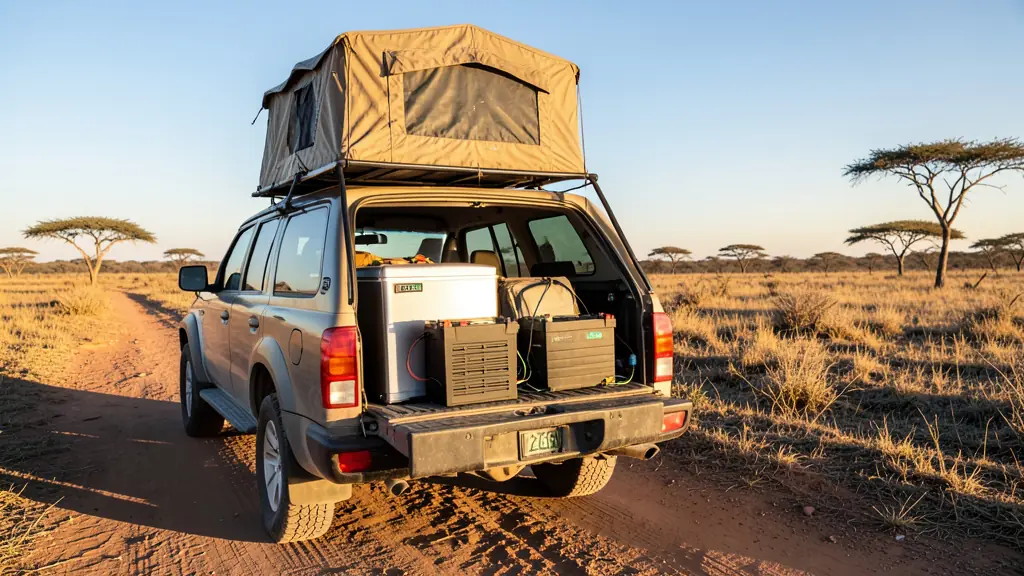
A deep cycle battery is built to deliver steady power for hours and then be recharged, over and over. That makes it the right choice for caravans, 4x4 fridges, boats, inverters and backup power, where a normal starter battery would quickly wear out. AutoElectricians.co.za helps you get a quote without trawling through specifications alone. Describe what you want to power and we pass your request to an independent battery supplier or auto electrician near you, who quotes directly. It is free, with no obligation to buy.
Deep cycle vs starter batteries
A starter battery delivers a large burst of current for a few seconds to crank the engine, then the alternator tops it up. A deep cycle battery is designed for the opposite job: delivering a moderate current for a long time and being drained well down before recharging. Using a starter battery to run a fridge overnight shortens its life quickly, while a deep cycle battery is not designed to crank an engine. Many overlanders therefore run one of each in a dual battery system.
AGM, gel and lithium LiFePO4 compared
- Flooded deep cycle: the most affordable option, but heavier, needs ventilation and may need topping up
- AGM: sealed, spill-proof and vibration-resistant, a popular all-rounder for caravans and 4x4s
- Gel: sealed and tolerant of deep discharge, but needs a charger with the correct gel profile
- Lithium LiFePO4: much lighter, more usable capacity and many more cycles, with a built-in battery management system; the highest upfront cost
Price is driven by capacity in amp-hours, chemistry, brand tier, warranty and any accessories such as a battery box, monitor or charger.
Depth of discharge and sizing
Depth of discharge (DoD) is how much of the battery's capacity you use before recharging. Lead-acid batteries, including AGM and gel, last much longer when you only use about half their rated capacity. Lithium LiFePO4 batteries can routinely use most of their capacity. That is why a smaller lithium battery can often do the work of a larger AGM.
To size a battery, add up what you will run, such as a fridge, lights, a water pump or an inverter, and how many hours a day, then allow for cloudy days if you rely on solar. A supplier can help work out a sensible capacity from that list.
Charging requirements and installation
Each chemistry needs the right charge profile. Many modern vehicles have smart alternators that do not charge a second battery properly through a simple relay, so a DC-DC charger is often recommended in the vehicle. At home or at a campsite, use a smart mains charger set for AGM, gel or lithium. For solar, match the solar charge controller to the battery type. Mount the battery securely, fuse the cables close to the battery, and use cable thick enough for the distance. In hot climates, avoid placing lead-acid batteries where heat builds up.
Comparing deep cycle batteries quotes
Prices for auto electrical parts move with brand, specification and fitment. When quotes arrive, check:
- Fit: that the part matches your vehicle's make, model, year and engine, or the battery size code.
- Warranty: the warranty period and what voids it, such as incorrect fitment or charging faults.
- Fitment and delivery: whether fitting, testing or delivery is included in the price.
- Trade terms: exchange or core-return discounts, fleet pricing and account options.
What to include in your request
- What you want to power, for example fridge, lights, inverter, and for how long
- Preferred chemistry (AGM, gel or lithium) and capacity in Ah if known
- How the battery will be charged: vehicle, mains, solar or a mix
- Whether you need a battery box, DC-DC charger, monitor or fitment
Frequently asked questions
Can I use a deep cycle battery to start my car?
Is a lithium deep cycle battery worth the extra cost?
Can I use a deep cycle battery with an inverter for load shedding?
Deep Cycle Batteries by province
- Deep Cycle Batteries Gauteng
- Deep Cycle Batteries Western Cape
- Deep Cycle Batteries KwaZulu-Natal
- Deep Cycle Batteries Eastern Cape
- Deep Cycle Batteries Free State
- Deep Cycle Batteries Limpopo
- Deep Cycle Batteries Mpumalanga
- Deep Cycle Batteries North West
- Deep Cycle Batteries Northern Cape
Deep Cycle Batteries by city
- Deep Cycle Batteries in Johannesburg
- Deep Cycle Batteries in Pretoria
- Deep Cycle Batteries in Centurion
- Deep Cycle Batteries in Sandton
- Deep Cycle Batteries in Midrand
- Deep Cycle Batteries in Randburg
- Deep Cycle Batteries in Roodepoort
- Deep Cycle Batteries in Alberton
- Deep Cycle Batteries in Boksburg
- Deep Cycle Batteries in Kempton Park
- Deep Cycle Batteries in Benoni
- Deep Cycle Batteries in Germiston
- Deep Cycle Batteries in Krugersdorp
- Deep Cycle Batteries in Vereeniging
- Deep Cycle Batteries in Vanderbijlpark
- Deep Cycle Batteries in Cape Town
- Deep Cycle Batteries in Bellville
- Deep Cycle Batteries in Kuils River
- Deep Cycle Batteries in Somerset West
- Deep Cycle Batteries in Paarl
- Deep Cycle Batteries in Stellenbosch
- Deep Cycle Batteries in George
- Deep Cycle Batteries in Mossel Bay
- Deep Cycle Batteries in Worcester
- Deep Cycle Batteries in Durban
- Deep Cycle Batteries in Pinetown
- Deep Cycle Batteries in Pietermaritzburg
- Deep Cycle Batteries in Richards Bay
- Deep Cycle Batteries in Ballito
- Deep Cycle Batteries in Margate
- Deep Cycle Batteries in Newcastle
- Deep Cycle Batteries in Port Elizabeth (Gqeberha)
- Deep Cycle Batteries in East London
- Deep Cycle Batteries in Bloemfontein
- Deep Cycle Batteries in Welkom
- Deep Cycle Batteries in Polokwane
- Deep Cycle Batteries in Tzaneen
- Deep Cycle Batteries in Nelspruit (Mbombela)
- Deep Cycle Batteries in Witbank (eMalahleni)
- Deep Cycle Batteries in Middelburg
- Deep Cycle Batteries in Secunda
- Deep Cycle Batteries in Rustenburg
- Deep Cycle Batteries in Klerksdorp
- Deep Cycle Batteries in Potchefstroom
- Deep Cycle Batteries in Kimberley
- Deep Cycle Batteries in Upington